
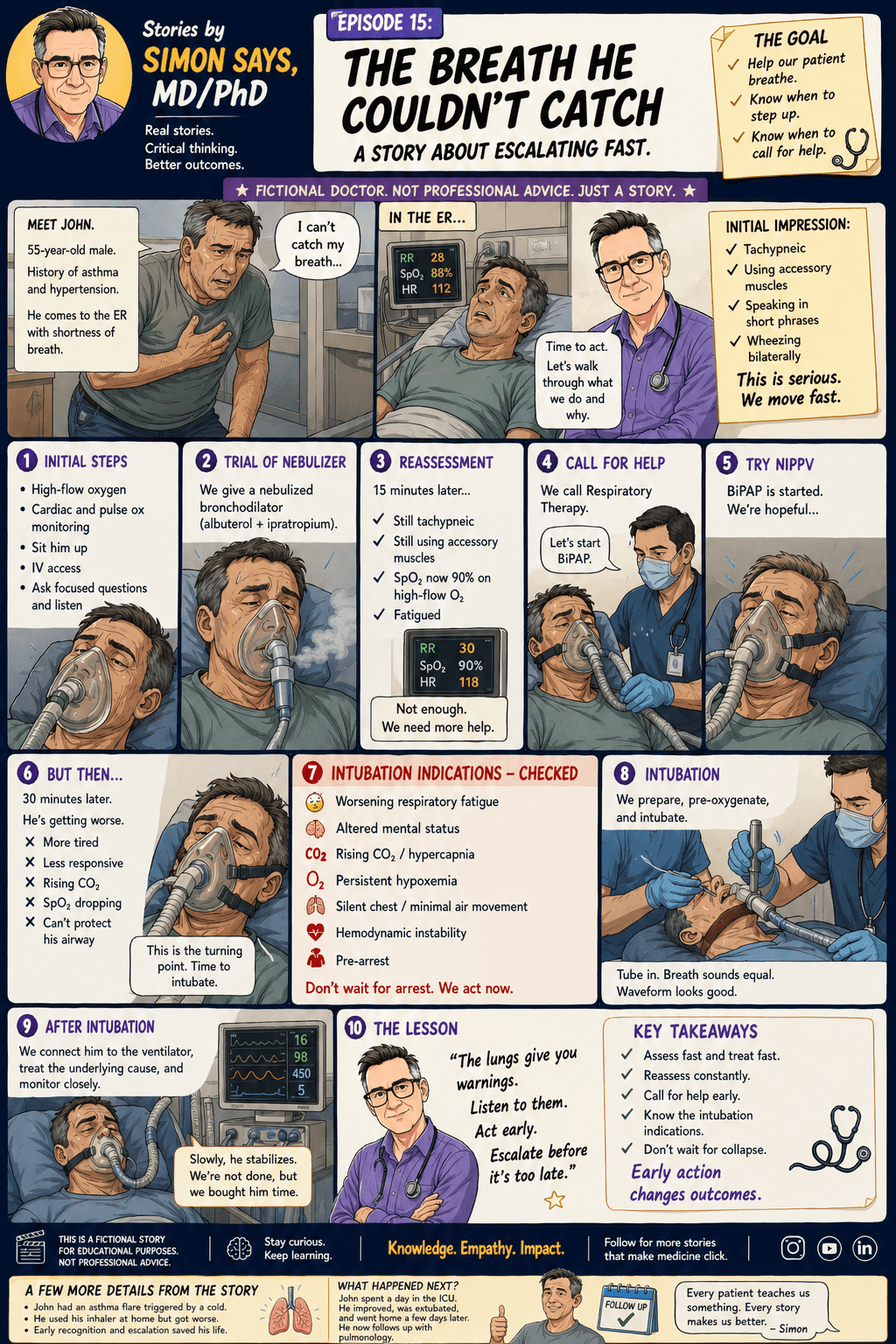
A fictional story by Simon Says, MD/PhD
It was just past midnight when John walked into the ER.
Fifty-five years old.
History of asthma.
A little hypertension.
Nothing unusual.
Except tonight… he couldn’t breathe.
🚶♂️ The Arrival
He leaned against the wall at triage, one hand on his chest, the other gripping the counter.
“I… can’t catch my breath…”
Short sentences.
Fast breathing.
Eyes wide.
The nurse didn’t need more.
“Let’s get him in.”
🛏️ In the Room
John sat upright on the bed, shoulders rising and falling with each breath.
Monitor on.
- Respiratory rate: high
- Heart rate: climbing
- Oxygen saturation: dropping
You could hear the wheeze from across the room.
That tight, whistling sound.
Air trying to move… and failing.
💨 First Moves
Oxygen went on immediately.
Nebulizer started.
A familiar rhythm in emergency care:
Act fast. Reassess. Repeat.
John nodded as the mask was placed over his face.
For a moment, it looked like it might work.
⏱️ Fifteen Minutes Later
He was still breathing fast.
Still using every muscle he had just to pull air in.
The numbers hadn’t improved much.
And now something subtle had changed.
He wasn’t panicking anymore.
He was… quieter.
⚠️ The Turning Point
Quiet can be dangerous.
The team exchanged a look.
This wasn’t improvement.
This was fatigue.
📞 Calling for Help
Respiratory therapy was called.
BiPAP was started.
The mask sealed tight, pushing air in.
For a moment, hope returned.
🔴 Then It Happened
Thirty minutes later:
- More tired
- Less responsive
- Oxygen falling again
- Breathing weaker
The wheeze?
Gone.
Not better.
Gone.
A silent chest.
🧠 The Decision
No one said it out loud.
They didn’t have to.
This was the moment.
If they waited longer, they would lose him.
⚡ The Action
“Prepare for intubation.”
The room shifted instantly.
Equipment ready.
Medications drawn.
Everyone in position.
This wasn’t panic.
This was precision.
🫁 The Airway
Tube in.
Breath sounds confirmed.
Ventilator connected.
Numbers began to stabilize.
Slowly.
🛌 After
John lay still, supported by the machine that was now breathing for him.
The crisis had passed.
But the lesson stayed.
⭐ The Lesson
Breathing problems don’t always get louder.
Sometimes they get quiet.
And quiet is when you act.
Not later.
Not after collapse.
Now.
🧠 Final Thought
Every patient gives you clues.
Fast breathing.
Effort.
Fatigue.
Silence.
The lungs will warn you.
Your job is to listen.
⚠️ Note
This is a fictional story for educational purposes only, not professional advice.

 Simon R. Downes