

Denise had lived with migraines for years, but recently they had become harder to ignore. The pain often started behind her right eye, followed by nausea and an intense sensitivity to light. After one particularly bad episode that forced her to leave work early, she decided it was time to talk to her doctor.
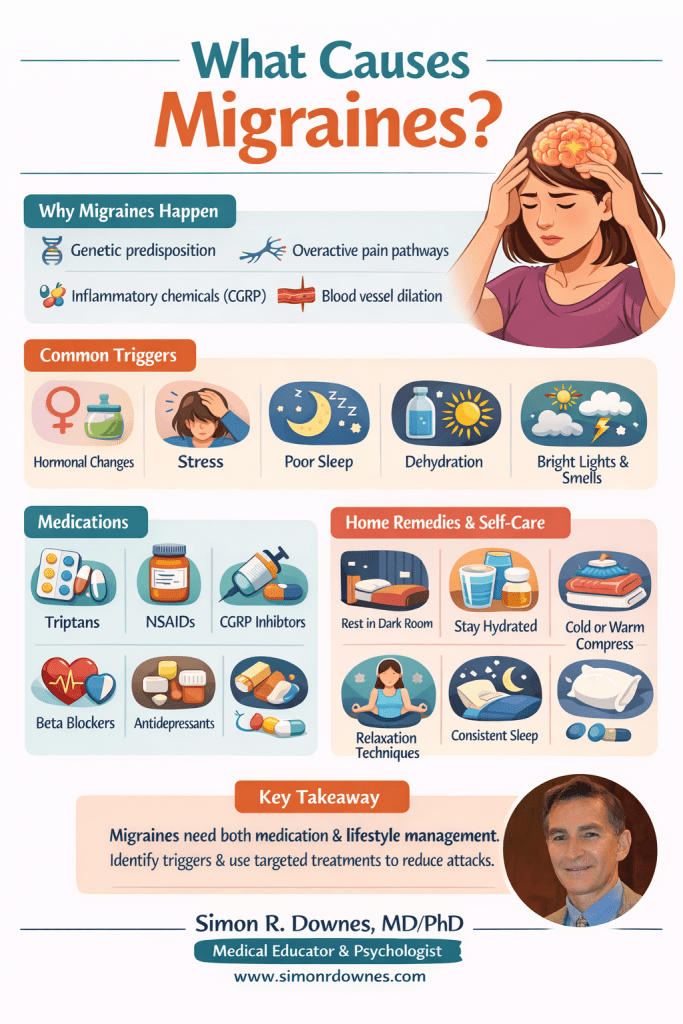
At the appointment, Denise described how her migraines usually appeared after stressful weeks or nights of poor sleep. She explained that she had already tried several home remedies on her own. When the pain started, she would lie down in a dark, quiet room, place a cold compress on her forehead, and sip water because dehydration seemed to make things worse. She also noticed that skipping meals or drinking too much coffee often triggered headaches, so she had begun eating more regularly and cutting back on caffeine. Gentle stretching and slow breathing sometimes helped take the edge off, especially when her neck felt tight.
Her doctor listened carefully and explained that Denise’s symptoms fit a common migraine pattern. He told her migraines are not just headaches, but a neurological condition involving sensitive nerve pathways and inflammatory chemicals in the brain. Stress, sleep disruption, dehydration, and hormonal changes can all make those pathways more reactive. The doctor reassured Denise that the steps she was already taking were helpful and evidence-based.
He suggested a few additional strategies to build on her routine. He recommended keeping a migraine diary to identify patterns and triggers, maintaining a consistent sleep schedule, and continuing relaxation techniques such as guided breathing or meditation. For acute attacks, he suggested trying an anti-inflammatory medication early in the headache, and discussed prescription options like triptans if the migraines continued to interfere with her daily life. For prevention, they also talked about lifestyle consistency and, if needed, preventive medications in the future.
Denise left the appointment feeling relieved. For the first time, her migraines felt understandable rather than mysterious. She realized that managing them was not about a single cure, but about combining medical guidance with the self-care habits she was already practicing. With a clearer plan and support from her doctor, she felt more confident about keeping her migraines under control.

 Simon R. Downes
Absolutely agree! As a patient who has reversed my chronic migraine diagnosis around; medication helps, but it was the lifestyle changes that have made all the difference – one without the other would not have worked for me. Great post! Linda 🙂
LikeLiked by 1 person