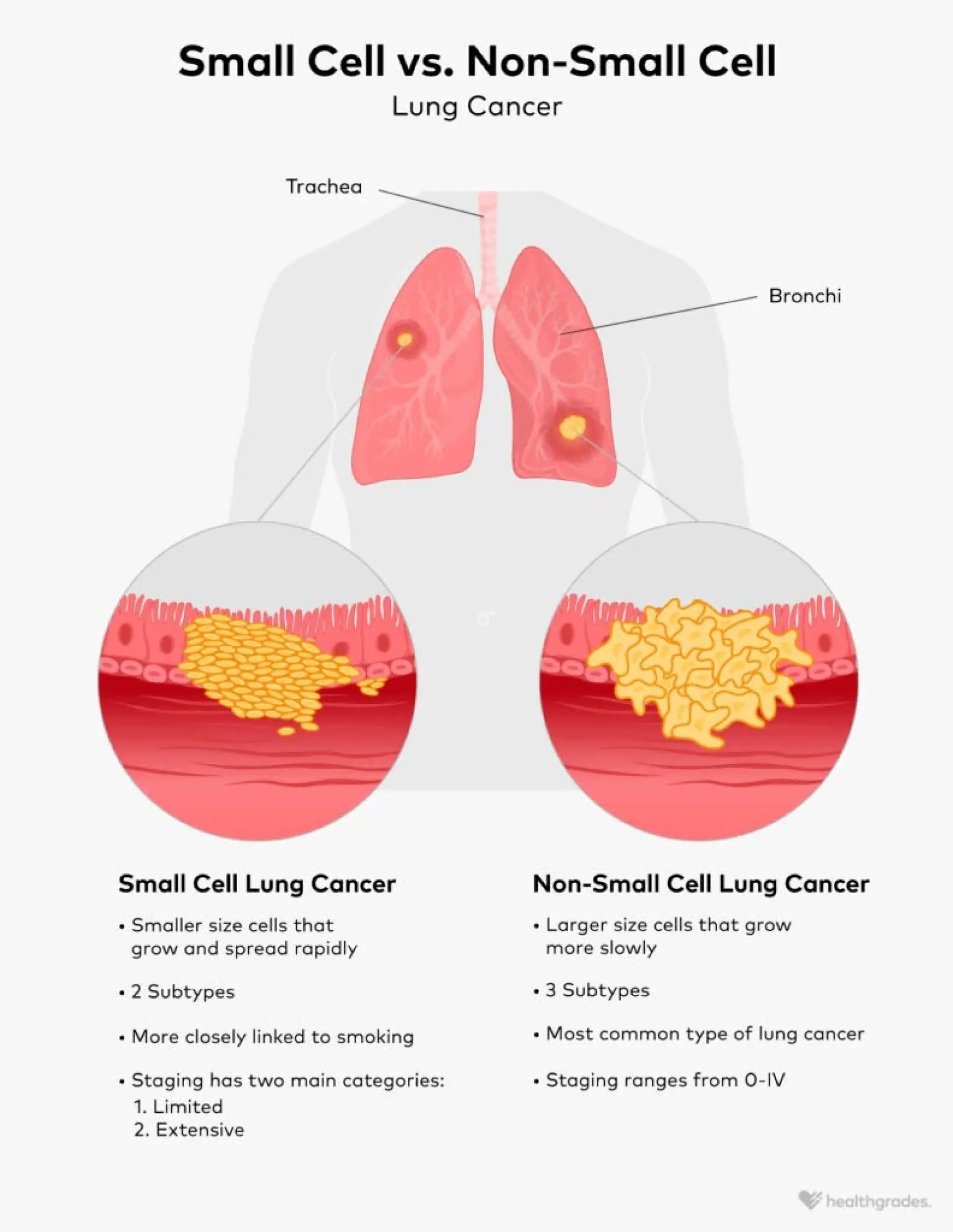
The main differences between small cell lung cancer (SCLC) and non-small cell lung cancer (NSCLC) include:
1. Cell Type & Growth Pattern
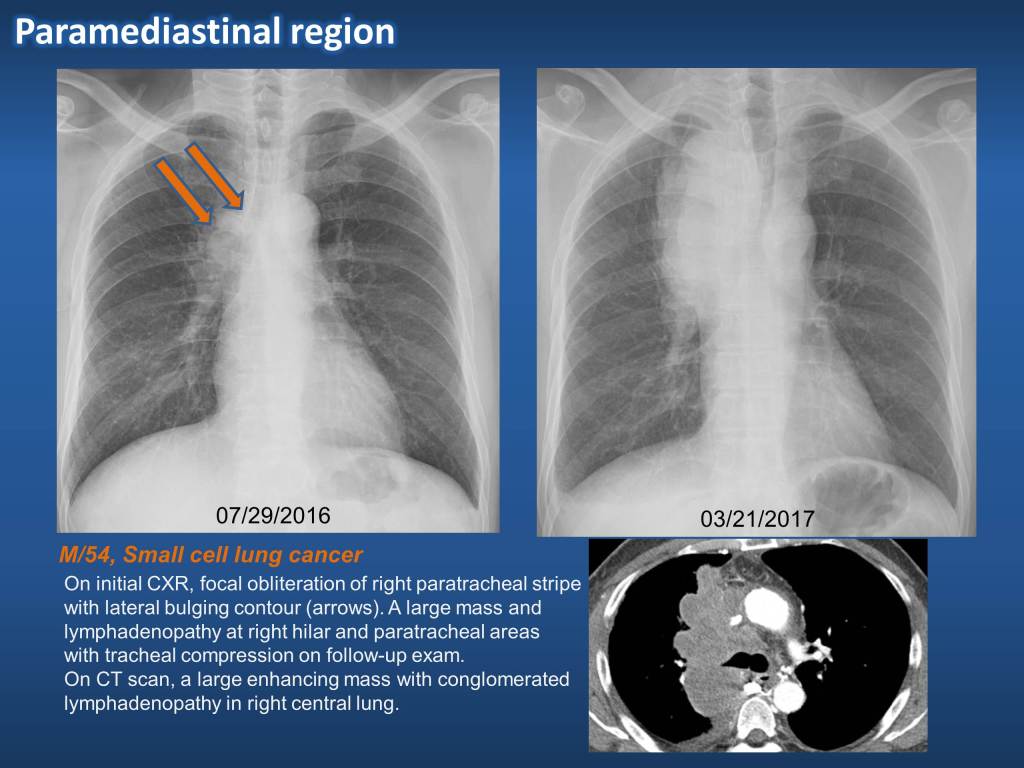
- SCLC: Composed of small, round, poorly differentiated neuroendocrine cells that grow rapidly and spread early.
- NSCLC: Includes adenocarcinoma, squamous cell carcinoma, and large cell carcinoma; these grow more slowly and tend to be more localized initially.
2. Association with Smoking
- SCLC: Almost exclusively seen in heavy smokers.
- NSCLC: Can occur in smokers and non-smokers (especially adenocarcinoma).
3. Location in the Lungs
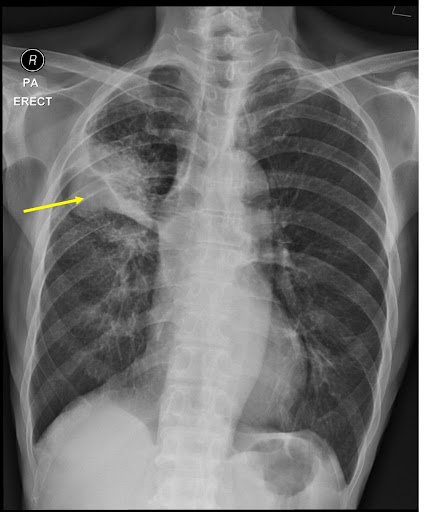
- SCLC: Typically central (near the bronchi).
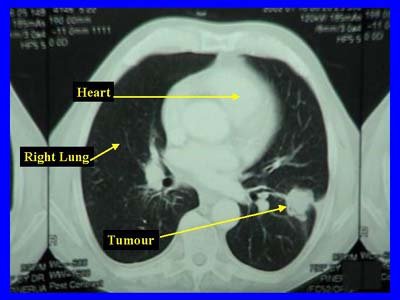
- NSCLC: Can be central (squamous) or peripheral (adenocarcinoma).
4. Metastasis & Prognosis
- SCLC: Highly metastatic, often diagnosed at an advanced stage. Poor prognosis.
- NSCLC: Spreads more slowly, often diagnosed earlier, and has a better prognosis.
5. Paraneoplastic Syndromes
- SCLC: More likely to cause paraneoplastic syndromes (e.g., SIADH, Cushing’s syndrome, Lambert-Eaton syndrome).
- NSCLC: Can cause hypercalcemia (especially squamous cell carcinoma due to PTHrP production).
6. Treatment Approach
- SCLC: Not surgically resectable in most cases; treated primarily with chemotherapy and radiation due to early metastasis.
- NSCLC: If caught early, can be treated with surgery, chemotherapy, radiation, and targeted therapy (EGFR, ALK, PD-L1 inhibitors).

 Simon R. Downes