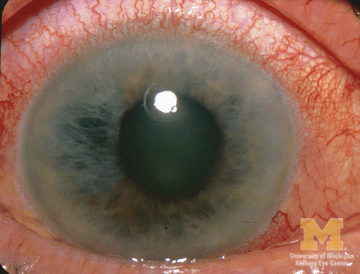
Pilocarpine is a muscarinic agonist that helps in acute angle-closure glaucoma (AACG) by relieving intraocular pressure. Here’s how it works:
Mechanism of Action in AACG
- Miosis (Pupil Constriction)
- Pilocarpine stimulates muscarinic (M3) receptors in the iris sphincter muscle.
- This causes pupil constriction (miosis), which pulls the iris away from the trabecular meshwork, reducing pupillary block.
- Opening of the Trabecular Meshwork
- Pilocarpine also stimulates ciliary muscle contraction, which stretches the trabecular meshwork.
- This opens up the drainage angle, allowing aqueous humor to outflow through the trabecular meshwork and Schlemm’s canal, reducing intraocular pressure (IOP).
Why is Pilocarpine Used in Acute Attacks?
- Fast-acting (onset within 20-60 minutes).
- Directly opens the drainage pathway in an emergency.
- Works alongside other treatments (e.g., acetazolamide, mannitol, laser iridotomy).
Limitations & Contraindications
- Not effective if IOP is too high (>40-50 mmHg) → Causes ischemic paralysis of the iris sphincter, making pilocarpine ineffective.
- May worsen inflammation if uveitis is present.
- Can cause headaches, blurry vision, and brow ache due to ciliary muscle contraction.
Final Note: While pilocarpine is useful in breaking an acute attack, the definitive treatment for AACG is laser peripheral iridotomy to prevent recurrence.

 Simon R. Downes